

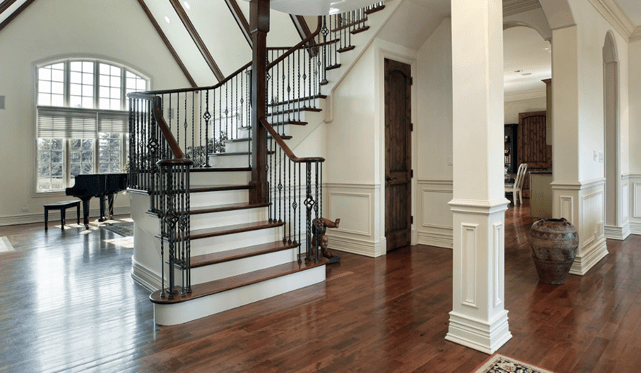
Picture a classic Wayne colonial: a gracious staircase in the foyer, original oak treads that have seen decades of foot traffic, and a long upstairs hall connecting bedrooms. The floors in these spaces work harder than almost any other surface in the home. Choosing the right hardwood here is as much about safety and durability as it is about style.
Think Function First: Safety, Noise, and Wear
Stairs and hallways are high-traffic by definition, so the wood you pick needs to stand up to constant use. Dense species such as oak and hickory resist dents better than softer woods, which is one reason so many Main Line homes already have oak hardwood on the upper levels. If you have an active household or pets, that extra durability matters.
Surface texture also affects safety. A perfectly smooth, glossy finish can feel slick on stairs, especially in socks. Many homeowners prefer subtle wire-brushed hardwood or lightly textured finishes on treads because they offer a bit more grip while still looking refined. Runners help, but starting with a surface that isn’t overly polished makes every step feel more secure.
Noise is another functional consideration in older Wayne homes. Hardwood will always transmit some sound, but good underlayment and professional installation keep creaks and echoes down. Alpine Flooring & Design’s installers understand how to fasten treads and landings correctly so the staircase feels solid underfoot, not hollow or squeaky.
Solid vs. Engineered for Upper Levels
On upper floors, both solid and engineered hardwood can work beautifully, but they behave a little differently with seasonal humidity swings. Solid planks offer a traditional feel and can be sanded multiple times. Engineered construction adds dimensional stability, which helps minimize gaps or cupping in homes that run hot in winter and cool in summer.
Many Wayne homeowners choose solid oak for treads and risers to match existing floors, then use engineered planks in adjacent hallways where wider boards or specialty finishes are desired. Brands like Mirage hardwood offer coordinated collections, so you can keep the staircase classic and still have more contemporary colors or widths in the hall without the transition feeling disjointed.
If your home already has hardwood upstairs, a skilled refinishing team can often restore those treads and hall planks instead of replacing them. Alpine Flooring & Design’s hardwood refinishing services use 99% dust-free sanding, which is especially important on staircases where containment is tricky.
Coordinating Color and Sheen with the Rest of the Home
Stairs and hallways visually connect levels, so the color and sheen you choose should feel intentional next to the flooring on each floor. Many Main Line homes pair deeper tones on treads with slightly lighter floors in halls to keep the space from feeling heavy. Others run one continuous color from foyer to second floor for a calm, unified look.
A mid-sheen finish often works best in these areas. Ultra-matte hides scuffs but can look very casual in formal center-hall layouts, while high-gloss shows every footprint. Collections from brands like Mullican hardwood give you multiple sheen options within the same color family, which makes it easier to fine-tune the look without sacrificing durability.
If your existing floors are in good structural shape but the color no longer fits your style, refinishing allows you to change the stain on the stairs and halls to coordinate with a new design scheme. In many Wayne renovations, that approach preserves original character while updating the overall palette.
Why Professional Installation Matters on Stairs
Stairs are one place where craftsmanship is immediately visible. Poorly cut nosings, inconsistent tread depths, or gaps at skirt boards stand out every time you go up or down. Professional residential flooring installation ensures that the geometry of your staircase is safe, code-compliant, and visually clean.
Hallways add another challenge: many have multiple doorways and transitions into bedrooms or baths. Careful layout prevents narrow slivers of wood at thresholds and keeps the pattern running straight from end to end. That attention to detail is part of why hardwood flooring in Wayne projects often start with a visit to the Newtown Square showroom to review layout options on plans before a single board is installed.
Ready to Plan Your Stairs and Hallway Upgrade?
Choosing hardwood for stairs and hallways means balancing safety, durability, and design so those everyday paths through your home feel solid and look timeless. The team at Alpine Flooring & Design can help you evaluate species, textures, and constructions that make sense for your specific layout and lifestyle. Visit the Newtown Square showroom to see options in person, or schedule your free estimate to have a specialist review your staircase and halls on site.


