

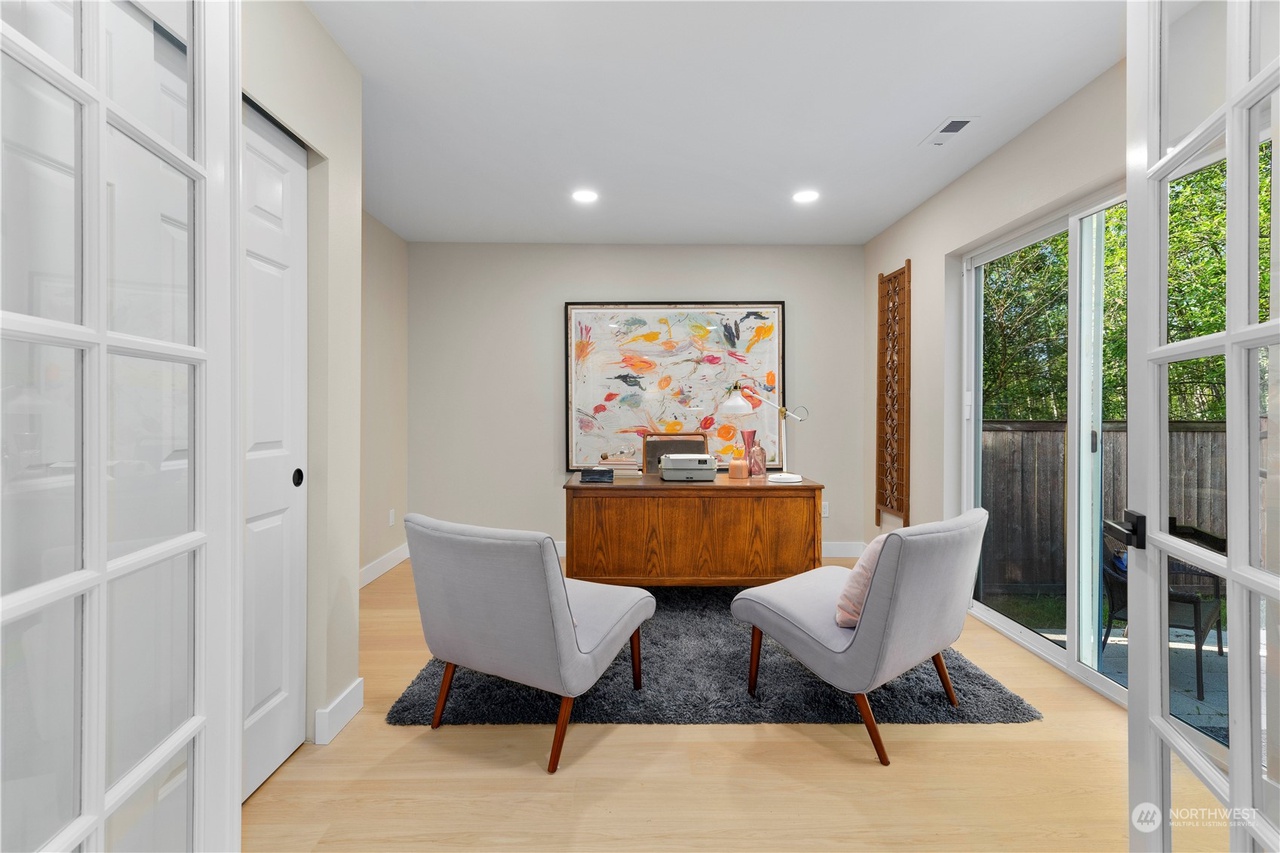
A quiet home office can turn frustrating fast when the floor works against the room. We see it often after a renovation in Newtown Square: the desk is in place, the lighting is right, but the floor still feels too echo-prone, too busy, or too delicate for rolling chairs and daily use. In dens, the challenge is a little different. You want warmth and character, but you also need a surface that can handle pets, reading chairs, and the traffic that comes with a room people actually use.
Start with how the room behaves
Home offices and dens put different kinds of stress on wood. An office often has chair casters, concentrated furniture weight, and long hours of sunlight in one spot. A den usually sees more varied movement, from kids dropping onto the sofa to guests crossing through with drinks in hand. Before choosing color or plank width, it helps to look through the hardwood we carry with those habits in mind.
That practical lens usually leads to better decisions. A lower-sheen finish tends to show less fine scratching than a glossy one, and busier grain patterns can disguise everyday wear more gracefully than very uniform boards. If the room gets strong afternoon sun, the species and stain should also be chosen with natural color change in mind, because wood will mellow over time.
Construction matters more than many homeowners expect
In the Philadelphia suburbs, seasonal movement is part of the conversation. Humid summers can swell boards, while heated winter air can dry them out and make small gaps more visible. For many offices above a basement or over changing humidity conditions, the engineered collections from Mirage hardwood are worth a serious look because they offer the visual depth of real wood with strong dimensional stability.
That does not mean solid wood is off the table. It means the subfloor, the room's climate, and your long-term expectations should guide the choice. We usually encourage homeowners to maintain indoor humidity around 35 to 50 percent, especially in spaces where computers, built-ins, and wood flooring all share the same environment.
Plan for furniture, acoustics, and future maintenance
A beautiful floor can still disappoint if the room sounds sharp or starts showing wear in predictable spots. In a Wayne home office, for example, a rolling chair without a protective mat can age one small area much faster than the rest of the room. Felt pads under case goods, an area rug at the seating zone, and thoughtful furniture placement all help the floor wear more evenly.
It is also smart to think a few years ahead. Some older dens already have wood underfoot, and replacing it is not always the best first move. As Pennsylvania's largest hardwood-floor refinishing company, we often help homeowners compare new installation with dust-free refinishing when the existing floor still has good structure. In the right room, refinishing preserves character, avoids a full tear-out, and lets you reshape the look with a new stain and sheen level.
Use the room to guide the style
Offices usually benefit from restraint. Cleaner grain, balanced color, and a finish that does not bounce glare back at a screen can make the room easier to work in every day. Dens can handle a little more visual movement, especially if the goal is to make the space feel relaxed rather than formal. If you want to compare how tone, texture, and board scale affect the room as a whole, our flooring visualizer can help you narrow the field before you commit.
At Alpine Flooring & Design, we find that the best hardwood choices for these rooms are rarely about trends alone. They come from matching construction, finish, and wood character to the way you actually live and work in the space.
If you're ready to sort through options for a den, study, or home office, we invite you to visit our showroom or request a free flooring estimate.


