

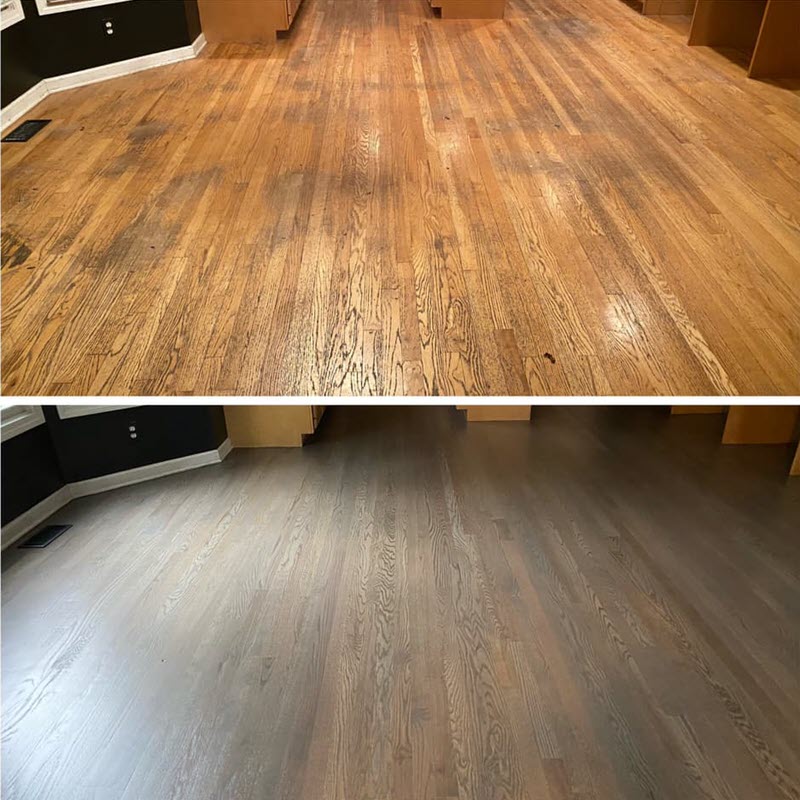
A lot of Main Line homeowners walk into the Alpine showroom with the same question: “Our oak floors are tired, but still solid. Do we refinish them or rip them out and start over?” In a 1960s colonial in Newtown Square, that decision can swing the budget on a whole first-floor renovation.
What You Actually Pay For: Refinish vs. Replace
Refinishing works with the wood you already have. Costs typically cover sanding, minor repairs, stain, and finish. There’s no new lumber, and there’s very little demolition, which keeps labor hours lower than a full tear-out and reinstall.
Replacing means paying for three big buckets: removal and disposal of the old floor, new material, and full installation. Even with a mid-range product like oak hardwood, those line items add up quickly across a few thousand square feet. Add new baseboards or transitions, and the gap between refinishing and replacing widens further.
For many homes, especially those with solid planks, refinishing comes in at a fraction of the cost per square foot compared with replacement.
How Condition and Thickness Change the Math
The first question a professional will ask is not “What color do you want?” but “How many sandings are left in this floor?” Solid planks usually tolerate multiple refinishing cycles. Thicker boards in older Wayne and Gladwyne homes can sometimes be revived three, four, or even five times over their life.
Engineered products are different. High-quality engineered hardwood has a thick wear layer that may allow one or two sandings, while entry-level products often do not justify the cost of refinishing at all. In those cases, replacement becomes the more rational long-term investment.
Severe water damage, major structural movement, or extensive pet staining can also tip the balance. If large sections are soft, cupped through the full thickness, or patched with mismatched species, replacement often saves money and frustration over repeated repairs.
Long-Term Value: Lifespan, Style, and Home Price
Refinishing lets you reset the look of your floors without paying for new wood. A dated orange finish can become a cool, modern neutral simply by changing stain and sheen. Alpine’s hardwood flooring guide walks through how different species and finishes respond to this kind of update.
Because you keep the existing subfloor and layout, refinishing is also less disruptive. Pennsylvania’s largest hardwood refinishing services provider, Alpine Flooring & Design, uses 99% dust-free sanding and professional-grade finishes, which shortens downtime and reduces cleanup costs that often get overlooked in DIY budgets.
Replacement can make sense if you want to change plank width, pattern, or species entirely. Moving from narrow strips to wide-plank hardwood, or from basic red oak to a premium line like Mirage hardwood, can support a higher resale price in competitive markets like West Chester. In those cases, the higher upfront cost is partly offset by long-term value.
Budgeting Smart for Your Main Line Home
The real decision point is not just “What’s cheaper today?” but “What delivers the best value over the next 10–20 years?” A solid floor with cosmetic wear usually earns its keep through refinishing. A thin, low-grade product that’s already on its last sanding rarely does.
Homeowners comparing hardwood options for a renovation in Wayne or a full first-floor update in Newtown Square often start with a site visit to assess board thickness, subfloor condition, and layout complexity. That on-the-ground information allows a realistic comparison between refinishing and replacing, including disruption, timing, and long-term maintenance expectations.
If you’re weighing this decision for your own home, visit the Alpine Flooring & Design showroom in Newtown Square or schedule your free estimate to get a detailed, line-by-line comparison tailored to your floors.


