

Hardwood floors rarely fail all at once. They fade, scuff, and dull so gradually that most homeowners in Newtown Square and across the Main Line can’t say when “lived-in” became “worn out.” By the time you’re wondering whether your floors need professional help, they usually do — the real question is which kind.
That distinction matters, because there are two very different answers that are often confused: a full refinish (sanding to bare wood and applying new finish) and a professional deep clean and recoat. One is a renovation; the other is maintenance. Choosing correctly can save you thousands — and as Pennsylvania’s largest hardwood refinishing company, we’d rather tell you the honest answer than sell you the bigger project. Here are the five signs that point to refinishing, and the situations where something lighter will do.
The Five Signs, One by One
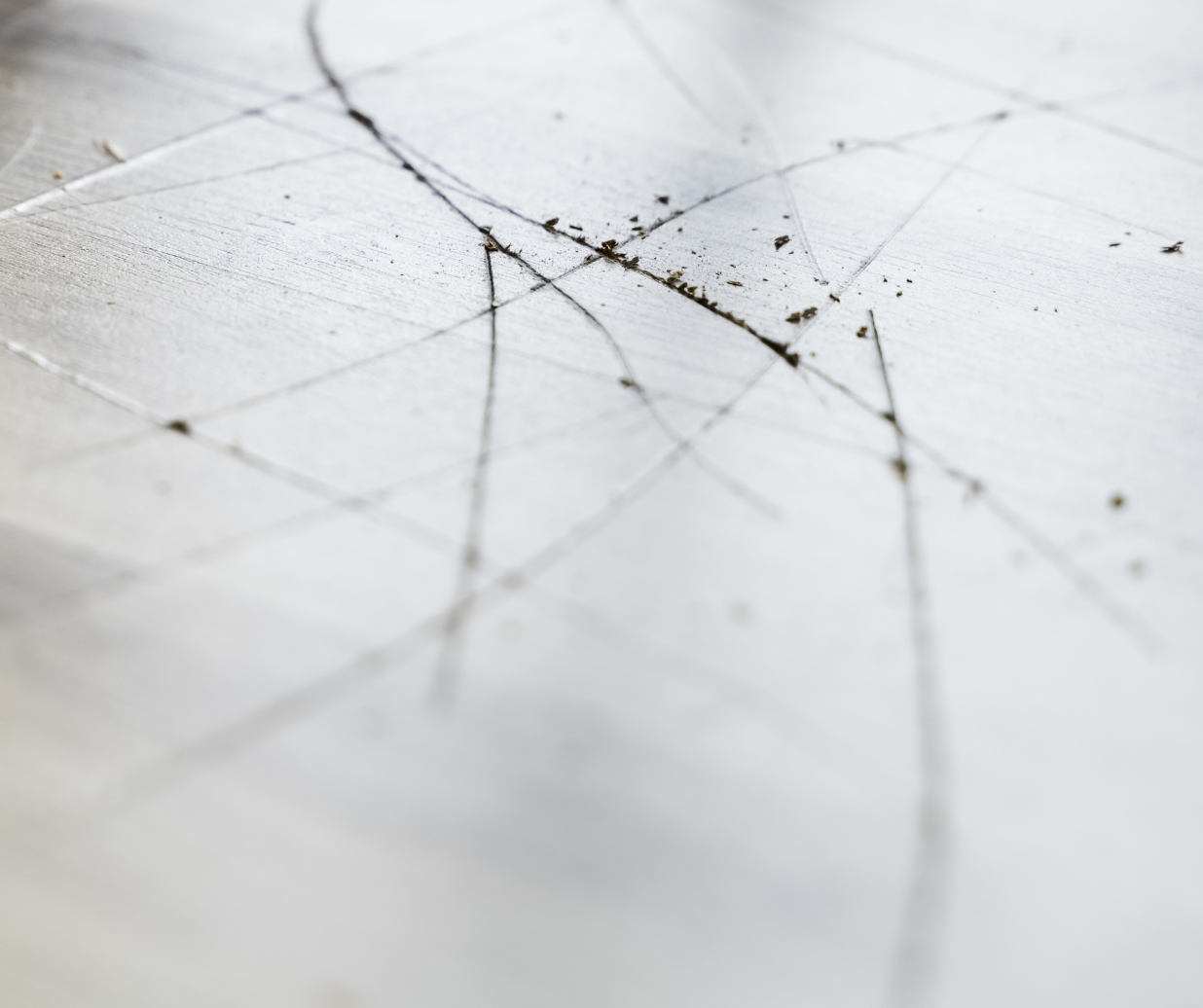
Scratches that reach the wood itself. Run your fingernail across a scratch. If it glides over a whitish line that lives in the finish, that’s cosmetic — a recoat can erase it. If your nail catches, the scratch has cut through into wood fiber. Traffic lanes full of them mean the finish has failed and the wood is taking damage with every footstep. Sanding is the only way to truly remove scratches from wood, which is exactly what professional refinishing does. Afterward, felt pads and doormats — the basics in our floor care guide — make the next finish last years longer.
Gray or blackening boards. Gray isn’t a color hardwood turns for fun. When finish wears away completely, exposed wood absorbs moisture and oxidizes — first dull gray, then darker. Left alone, gray progresses to black, and blackened wood often can’t be sanded clear — those boards need replacement. This is the sign with a real deadline: catch it at gray and refinishing restores the boards; wait for black and you’re paying for board replacement too.
Water no longer beads up. This is the sixty-second test professionals use — try the interactive version in the next section. If a teaspoon of water soaks into the wood instead of beading on the surface, the protective finish is thin or gone, and moisture, grit, and stains are reaching unprotected wood.
Sun fading and hard-edged rug shadows. Move your area rug and compare. Some mellowing is natural, but a sharp outline — dark rectangle under the rug, bleached floor around it — means UV has broken down the finish and altered the wood’s color unevenly. No cleaning product fixes color. Refinishing sands to fresh wood and evens everything out — and it’s the moment to change color entirely if you’ve been eyeing a lighter, modern tone. Browse our finished work to see what a stain change alone can do.
It’s dull everywhere, and cleaning doesn’t help. If you’ve mopped correctly, skipped the wax-and-shine products, and the floor still looks tired wall to wall, the finish surface itself is worn out. Which service you need depends on the water test: finish intact but grimy means an Alpine Deep Clean™ restores shine for a fraction of refinishing cost; finish failing means it’s time for a full refinish.
The Water-Drop Test: Your Floor’s Sixty-Second Physical
Drip a teaspoon of water onto the floor in a high-traffic area and watch what happens. Try it in a few spots — floors wear unevenly, and a hallway can fail years before a guest room. Tap the outcome you see:
Good news: your finish is intact. Dullness is dirt or wear in the finish, not failure. Keep up the care routine, and if shine won’t come back with proper mopping, a professional deep clean will reset it — no sanding needed.
The finish is thin and partially failed — you’re on the clock. Protection is failing in that zone. Get ahead of it this season, while a straightforward refinish is still all you need and before gray boards add repair costs.
The wood is unprotected. Every spill and footstep now damages bare wood. Book a free assessment promptly — refinish before moisture and stains set into the boards themselves.
The Bonus Sign: You’re Just Ready for a Change
Not every refinish is a rescue mission. One of the most common reasons Main Line homeowners refinish structurally healthy floors is simple: the color is dated. The glossy golden-oak look of the 1990s has given way to matte naturals and warm neutral browns — and refinishing is the only way to genuinely change a hardwood floor’s color. If you’ve been considering replacing your floors because of how they look, price a refinish with a new stain first; you’ll typically get the transformation for a fraction of replacement cost, without demolition or weeks of installation.
What Happens If You Wait Too Long
Refinishing has a deadline most homeowners don’t know about. A floor’s finish is the only thing standing between the wood and daily moisture, grit, and stains. Once it fails, the damage clock starts running on the wood itself: gray oxidized boards can usually still be sanded back to clean wood if caught early; blackened boards often must be cut out and replaced; cupped or warped boards from prolonged moisture may put the whole floor past saving. Every season a failed finish waits, some of that refinishing candidate’s value quietly converts into repair and replacement cost.
How Often Do Hardwood Floors Need Refinishing?
For busy households, every 7–10 years is typical; quieter homes and well-protected floors can go 15 or more. Solid hardwood is built for this cycle — a typical solid oak floor can be refinished four to six times over its life, which is why century-old floors around West Chester and Wayne are still going strong. Engineered hardwood is the exception: its wear layer usually allows one full refinish, sometimes two, and only a professional measurement can say. Learn more about the construction differences in our hardwood information guide.
Your Two-Minute Self-Inspection
Walk your floors and answer honestly. The meter reads your floor’s verdict as you go:
1. The fingernail test on your worst scratches:
2. The water-drop test in traffic areas:
3. Any gray or dark boards near doors, sinks, or radiators?
4. Lift a rug — what do the edges look like?
5. After a proper damp mop, does any luster return?
Answer the five questions to see your floor’s verdict.
What Refinishing Actually Involves (It’s Easier Than You Fear)
Most homeowners delay refinishing because they’re bracing for a dusty, week-long exile from their home. That’s an outdated picture. Alpine’s process uses 99% dust-free sanding with vacuum containment, certified-safe low-odor finishes you can walk on the same day, and we move the furniture ourselves. Most families stay in their homes for the entire project. Repairs, pet-stain treatment, and board replacement happen in the same visit, and the new finish carries our two-year Alpine Guarantee. The full picture — process, timelines, costs — is on our hardwood refinishing service page.
Not Sure? Get a Professional’s Eyes on It — Free
You don’t have to make this call from a blog post. We’ll check your finish, measure wear, test problem areas, and tell you plainly whether you need a refinish, a deep clean, or nothing yet — with a firm quote either way. Homeowners across Newtown Square, Wayne, West Chester, Gladwyne, and the rest of our service areas have used that honest assessment to save real money — their reviews tell the story. Call (610) 293-9663 or stop by our Newtown Square showroom whenever you’re ready.
Five signs, one honest answer. Find out which side of the line your floors are on.
Request Your Free Assessment →


